Rp-hplc Peptide Pureness Analysis
- The growth of the analytical method reveals that the created logical method is suitable for its recommended use for the measurable analysis of the targeted analyte existing in healing medications.
- These methods are extremely sensitive, enabling them to find even map quantities of impurities.
- The center is environmentally regulated and uses confirmed instrumentation, consisting of state-of-the-art HPLC systems interfaced with the Empower Chromatography Manager, for peptide filtrations and pureness assessments.
- Using the appropriate combination of approaches guarantees dependable peptide characterization ideal for both exploration job and official governing entries.
- Reviewing an HPLC chromatogram entails noting each height's retention time and area.
Extra Precise Slope Splitting Up
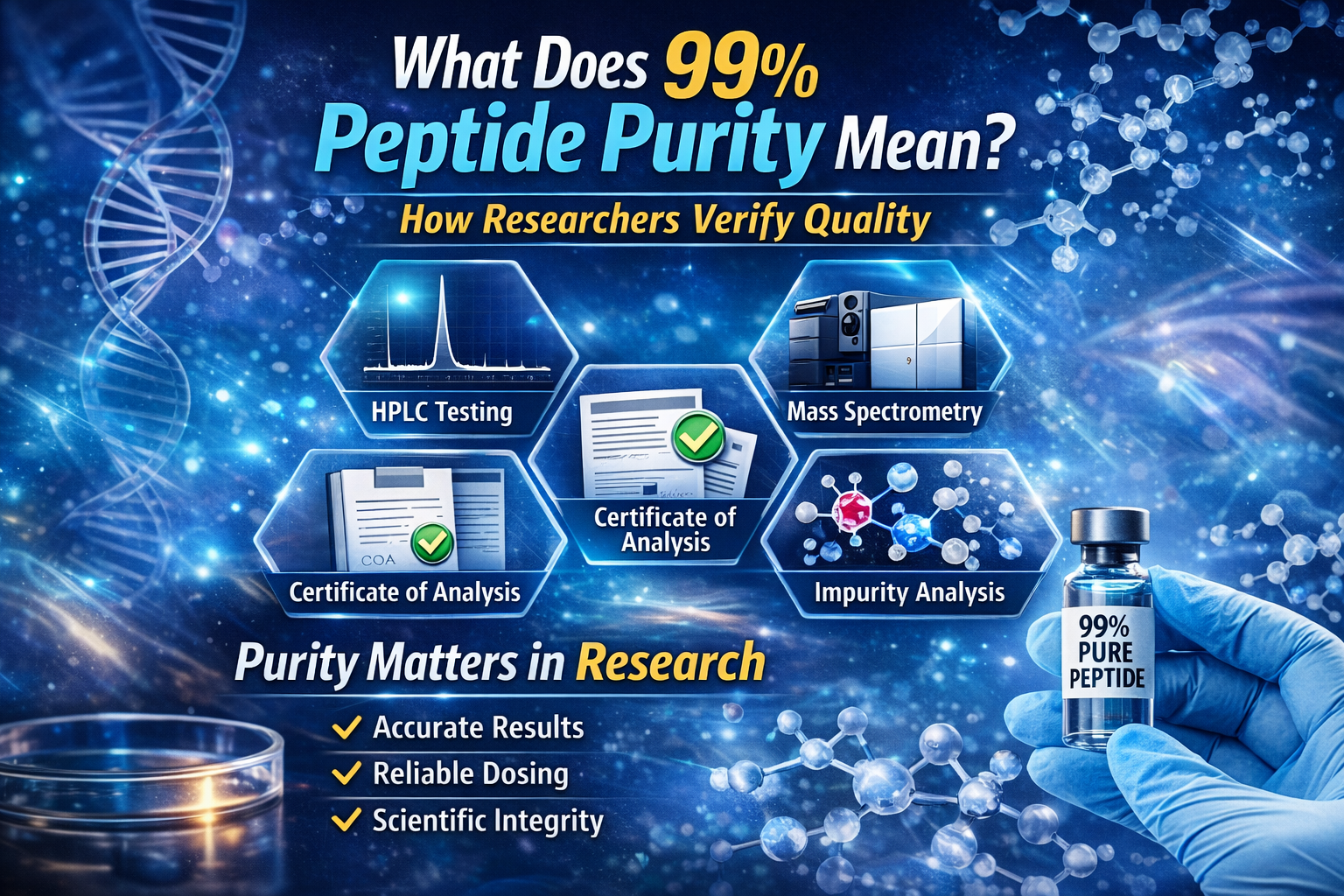
For research study peptides, molecular weight confirmation confirms the desired series, spots modifications such as oxidation or deamidation, and validates the absence of pollutants that could co-elute throughout HPLC evaluation. Modern instruments can perform tandem MS, fragmentizing the peptide to confirm the actual amino acid sequence. Peptides are intricate organic substances, and the precision of your research depends upon the accuracy of the material you make use of. However, the on-line market for peptides is swamped with unproven sources and inconsistent purity degrees. That's why Peptides Laboratory UK executes a two-layer confirmation system, incorporating independent lab testing with third-party validation by means of Optima Labs-- to assure clinical stability. Knowing how to test peptides for purity makes sure the reliability and reproducibility of every study protocol. This overview explains the 3 gold-standard logical methods-- HPLC, mass spectrometry, and third-party screening-- and how scientists can interpret outcomes to verify that their Article source substances meet research-grade quality criteria. Without orthogonal methods to spot these microheterogeneities, they multiply in a system (passing away as 'organic irregularity'), decreasing signal-to-noise and eventually invalidating whole information sets. Formal HPLC/MS characterization ices up that degeneration in place, subjecting each molecule to 2 orthogonal choice stress (hydrophobicity and mass-to-charge), developing a statistical firewall software around false identification. Regular pureness degrees range between 99.0% and 99.7%, lining up with international lab research study criteria. These examinations verify that peptides from Peptides Lab UK consist of no impurities, degradation by-products, or unwanted fillers-- simply validated, high-purity study product.What Are The Major Components Of Hplc Approach Validation?
Just how much does peptide HPLC testing cost?
The cost of peptide analysis service varies significantly based upon which strategies your regulatory package needs: HPLC-UV Analysis: $& #x 24; 300 & #x 2013; & #x 24; 800 per sample (basic purity analysis) LC-MS (Fluid Chromatography-Mass Spectrometry): $& #x 24; 600 & #x 2013; & #x 24; 1,500 per example (molecular weight confirmation).